
Eu3a Magazine - Summer 2026
On Record
The Genealogy Group go behind the scenes at the National Archives in Kew.

The National Archives (‘TNA’) are the official archive of the UK government, tasked with the permanent preservation of the state’s most vital records.
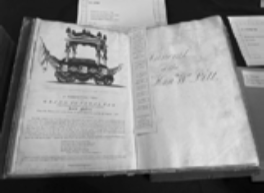
Its collection dates back nearly a millennium, its oldest and most famous record being the Domesday Book, a survey of England commissioned by William the Conqueror in 1086. Other famous artefacts include the last will and testament of William Shakespeare and the two signed confessions of Guy Fawkes following the 1605 Gunpowder Plot (one of which apparently has a much shakier signature, obtained after a long interrogation….!).
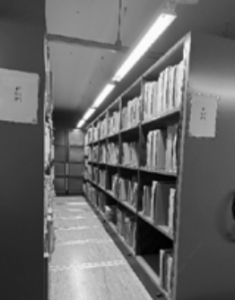
The archives hold around 11 million documents stored on some 100 miles of shelving. This collection grows by at least one mile of new records every year.
Once delivered to Kew, documents are housed in one of eight massive on-site repositories. The storage environment is strictly regulated to prevent any deterioration of the contents and is maintained between 13ºC and 23ºC with monitored humidity. Alice, our knowledgeable and engaging guide, also told us that the TNA building had been voted ‘the ugliest building in Richmond’ - twice!
For overflow space, TNA also uses “Deep Store”, located 150 metres underground in the worked-out areas of a Cheshire salt mine. This off-site storage holds approximately 30% of the collection, consisting mostly of digitised or low-demand records.
Unsurprisingly, making these millions of artefacts available to the public is a balance between open access and rigorous security. The Reading Rooms at Kew have space for more than 150 researchers. All must first obtain a Reader’s Ticket, which requires visitors to complete a document-handling induction.
Strict protocols apply when visiting. Only pencils, laptops and clear bags are permitted; pens and scanners being strictly banned. Visitors are required to watch a handling video and to use provided aids like book rests or weighted snakes to protect fragile pages.
There are separate, dedicated areas for researchers who have requested 20 or more documents from the same record series, and for those wanting access to oversized items, maps, or pre-16th century documents.
We were given an interesting explanation and demonstration of how documents requested by researchers in advance of their visit are made available on their arrival. After use, they are returned to their storage location and replaced in a committed response time by any further documents requested during the researcher’s visit.
Another, less-regulated, area – the Research and Enquiries Room – offers a drop-in facility that does not require pre-booking. This room contains numerous computers for accessing digitised records, a reference library, and help desks for expert advice.
TNA has shifted heavily toward digital availability. Over 66 million documents were downloaded by users last year, and the “digitisation on demand” services allow users to request digital copies of records not yet online. Our Genealogy group are already users of TNA’s online data, not least its range of military records. These comprehensive records are available for download, but are almost entirely in manuscript form, which can be difficult to decipher.
As a further connection within Eu3a, the Genealogy group is currently working closely with the recently-formed Eu3a Artificial Intelligence group to explore how AI can be used to improve the legibility and intelligibility of these hand-written documents.
Peter Andrew