
Eu3a Magazine - Summer 2026
A Woman of Substance
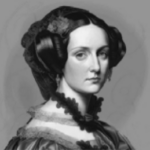
Ada Lovelace was the first person to see the potential of the computer machine as a tool that could extend the power of the imagination.
I remember the excitement in our home when we acquired an infant computer to play Pac-Man, while a friend worked as a programmer on a computer the size of a small room. Today it’s hard to imagine a world without computers and we have Ada Lovelace to thank for her pioneering contribution.
Born in 1815, Esher resident, Ada was considered a mathematically genius from an early age when she developed a fascination with designing fanciful boats and flying machines and studying diagrams of new inventions seen in scientific magazines.
As the only legitimate child of the poet Lord Byron, Ada benefited from a good education as her mother, Annabella Milbanke, insisted that she was taught logic, science and mathematics from a young age. This background brought Ada in contact with renowned scientists, including Charles Babbage, who described her as ‘The Enchantress of Numbers’. While working on his invention of the Analytical Engine – the mechanical ancestor of today’s computer– Babbage became Ada’s mentor and lifelong friend.
At just 19 Ada married the aristocrat William King who later became Earl of Lovelace with whom she had three children. The family lived in Sandown House in Esher
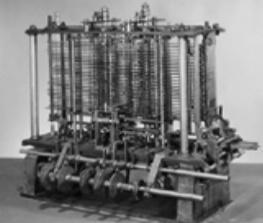
While Babbage saw his ‘computer’ as a gigantic calculating machine, Ada saw beyond using it for punch cards and number crunching. in 1843 having been asked to translate an article about the Analytical Engine, by an Italian engineer, she added her own notes believing that it had creative potential and might one day compose music or design graphics. Ada’s creative notations are now believed to be the first algorithm.
Janet Donin