
Eu3a Magazine - Autumn 2026
CLAREMONT LANDSCAPE GARDEN
This 18th century garden is an oasis in the heart of Surrey.
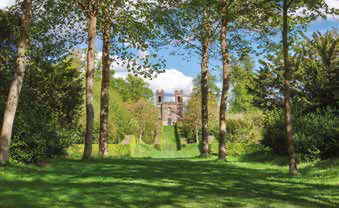
I first visited Claremont some 30 years ago when, together with friends, we donned fancy dress and laden with picnics would gather on the grass amphitheatre to enjoy the annual festival of music, theatre and fireworks.
Owned by the National Trust, the 49-acre gardens of Claremont still host summer festivals, maintaining a tradition that began two centuries ago by the Duke of Newcastle, who turned it into Surrey’s ‘go to’ destination. It was his wife Lady Henrietta who named Claremont.
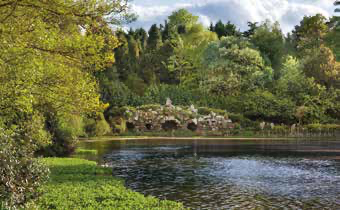
The fabulously wealthy Duke bought Claremont from architect Sir John Vanburg and hired the landscape gardeners to reimagine the estate. The pond was enlarged and a small pavilion erected on the central island, together with a bear statue - a replica of the Duke’s crest. At one end an arch-shaped, stone grotto was added that children and adults still find fascinating. it was to this rural idyll that influential nobles were invited to enjoy boating on the lake – still a popular pastime in summer today.
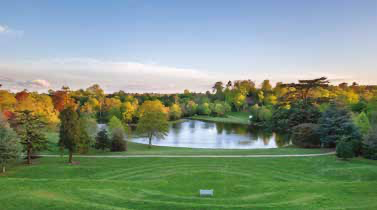
The unique grass amphitheatre, overlooking the lake and surrounded by woodland, became a special feature where cuckoos, nightingales and swallows could be seen. Today you’re more likely to see Wrens and Blue Tits plus the occasional Nuthatch and Woodpecker. Within the woodland the new Belvedere Tower became a meeting place for the Duke’s friends from London’s Kit-Cat Club, while a telescope on the roof was ideal for star gazing.
Clive of India bought Claremont in 1769 for £25,000 replacing the house with a new manor, now owned by Claremont Fan Court School, and employed Lancelot ‘Capability’ Brown to make minor improvements to the garden.
In the early nineteenth century, Princess Charlotte acquired Claremont on her marriage to Prince Leopold and commissioned the Camellia House, one of the first ever glasshouses. Although it was demolished in 1959, some of the original camellias still bloom creating beautiful displays on the new Camellia Terrace.
The young Queen Victoria fell in love with Claremont during childhood visits to her Uncle Leopold and on her marriage to Prince Albert, she relived those memories with her own children. Later she was granted the estate by Parliament and gifted it to her son. For a short time during the First World War the house was used as a military hospital.
Between the wars, the gardens were unloved until 1947 when they were passed into the care of the National Trust. However, it wasn’t until 1975 that thanks to a donation from the Slater Foundation and the efforts of volunteers, the estate was to become the beautiful gardens we enjoy today.
Janet Donin